
 By Alan Gore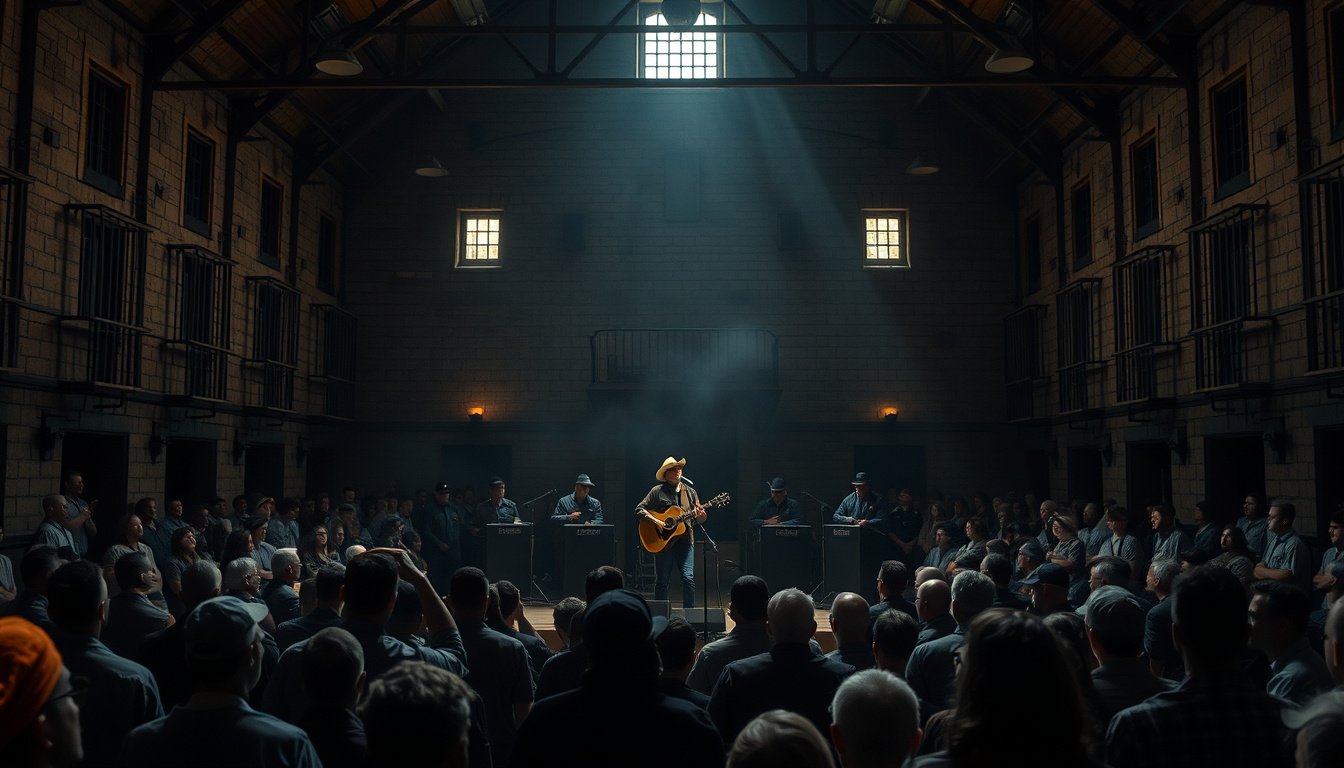
In January 1968, Johnny Cash took to the stage at Folsom State Prison in California for a live concert that would not only redefine the music landscape but also change perceptions surrounding inmates and redemption.
The event, famously documented in the album ‘At Folsom Prison,’ was not just an ordinary performance; it was a bold statement about the real struggles of prisoners and a testament to the healing power of music.
This article delves into the context of Cash’s historic performance—exploring the motivations behind it and its enduring impact on both the artist’s career and society at large.

Key Takeaways
- Johnny Cash’s Folsom Prison concert was not just a performance but a powerful statement of solidarity with inmates.
- The concert transformed Cash’s career and established his image as a voice for the marginalized.
- It left a lasting legacy, influencing the perception of live music in unconventional venues and its impact on social justice.
The Context of Cash’s Performance: History and Motivation
In the annals of American music history, few performances resonate as deeply as Johnny Cash’s Folsom Prison concert on January 13,
1968.
This landmark event not only marked a pivotal moment in Cash’s career but also showcased the intersection of art, emotion, and societal issues.
Cash was motivated by a profound connection to the prisoners at Folsom State Prison, many of whom faced brutal realities and systemic injustices.
His performance aimed to bring a glimmer of hope and humanity to individuals often marginalized by society.
The concert was a culmination of Cash’s lifelong respect for the working class and those on the fringes, depicted vividly in his music and persona.
By performing there, Cash also sought to challenge the public’s perception of inmates, illustrating their struggles through heartfelt melodies and authentic storytelling.
This unprecedented live concert not only revitalized Cash’s career but also reignited his passion for social justice issues, making it a noteworthy chapter in the history of not just country music, but also American cultural heritage.
The Impact and Legacy of the Folsom Prison Concert
## The Impact and Legacy of the Folsom Prison Concert
In 1968, Johnny Cash’s legendary performance at Folsom State Prison became a pivotal moment in music history and the country’s cultural landscape.
This concert not only aimed to uplift the spirits of the incarcerated but also reinforced Cash’s image as the voice of the disenfranchised.
Recorded live, the concert produced one of Cash’s most celebrated albums, ‘At Folsom Prison,’ which showcased his profound empathy for prison life and resonated deeply with audiences, both inside and outside prison walls.
Cash’s raw, authentic sound captivated listeners and brought the realities of prison life to the forefront of American consciousness.
By choosing to perform in such a setting, Cash challenged societal norms, creating a legacy that highlighted the power of music as a means of social commentary.
The concert’s impact continues to inspire artists today, reflecting a poignant intersection of music and activism.
For a more in-depth exploration of this iconic event, including behind-the-scenes stories and the concert’s lasting effects on Cash’s career, visit What Johnny Cash’s Folsom Prison Concert Was Really Like from grunge.com, where you’ll find fascinating insights about this historic event.